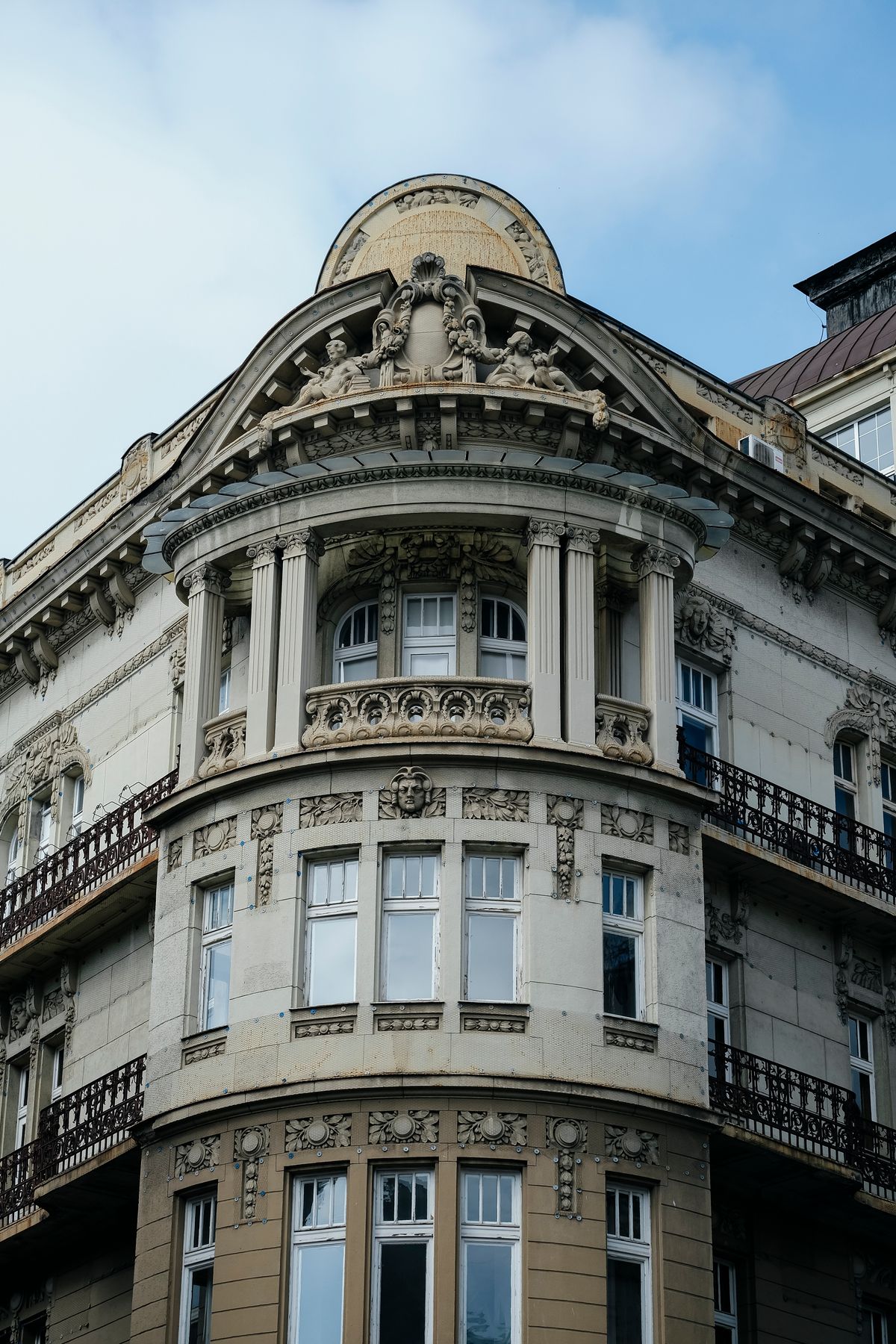
If the energetic chaos of Belgrade becomes too much, it is time to head north. Just a short drive north from our home base in Novi Sad, the Vojvodina province offers a completely different rhythm compared to the rest of the Balkans. Defined by its flat plains, Austro-Hungarian heritage, and exceptional culinary traditions, this region is the capital of Serbian slow-living. The crown jewels of this area are the visually striking city of Subotica and the ultra-relaxed town of Sombor.
Subotica: The Art Nouveau Masterpiece
Subotica does not look like a typical Serbian city. It looks like a vibrant, ceramic-tiled fairy tale.
Raichle Palace
Arguably the most photographed building in the city, featuring spectacular Hungarian Art Nouveau details, sweeping curves, and colorful Zsolnay ceramics.
The City Hall
A towering masterpiece of early 20th-century design. You must step inside to see the stained glass windows from the parliament chamber.
Palić Lake
Just outside the city, this lake complex offers more Art Nouveau pavilions and excellent traditional goulash at the local čarda (fish taverns).
Sombor: The Capital of Slow Living
If Subotica is about visual overload, Sombor is about taking a breath. Known as the greenest city in Serbia, its streets are lined with massive, century-old hackberry trees.
The Art of Vojvodina Slow Pacing
- •The Carriage Ride: Sombor is one of the last places in Europe where horse-drawn carriages (fijaker) are still a normal part of the city square's fabric.
- •Culinary Pacing: Do not rush your meals here. Spend hours at a local salaš (traditional farmhouse restaurant) eating slow-cooked meats, drinking local domestic wine, and listening to tamburaši acoustic bands.
Ready for a Dramatic Contrast?
Traded the flat plains of Vojvodina for something more rugged? Head deep into central Serbia to explore crumbling medieval castles and mountain monasteries.
Read: The Ruined Beauty of Maglič & Studenica